

Discover Barcelona from the sky: Why take a helicopter flight?
Barcelona is a city full of history, culture and architectural beauty. However, there is one experience that can elevate your visit to a new level: a helicopter flight over the city.
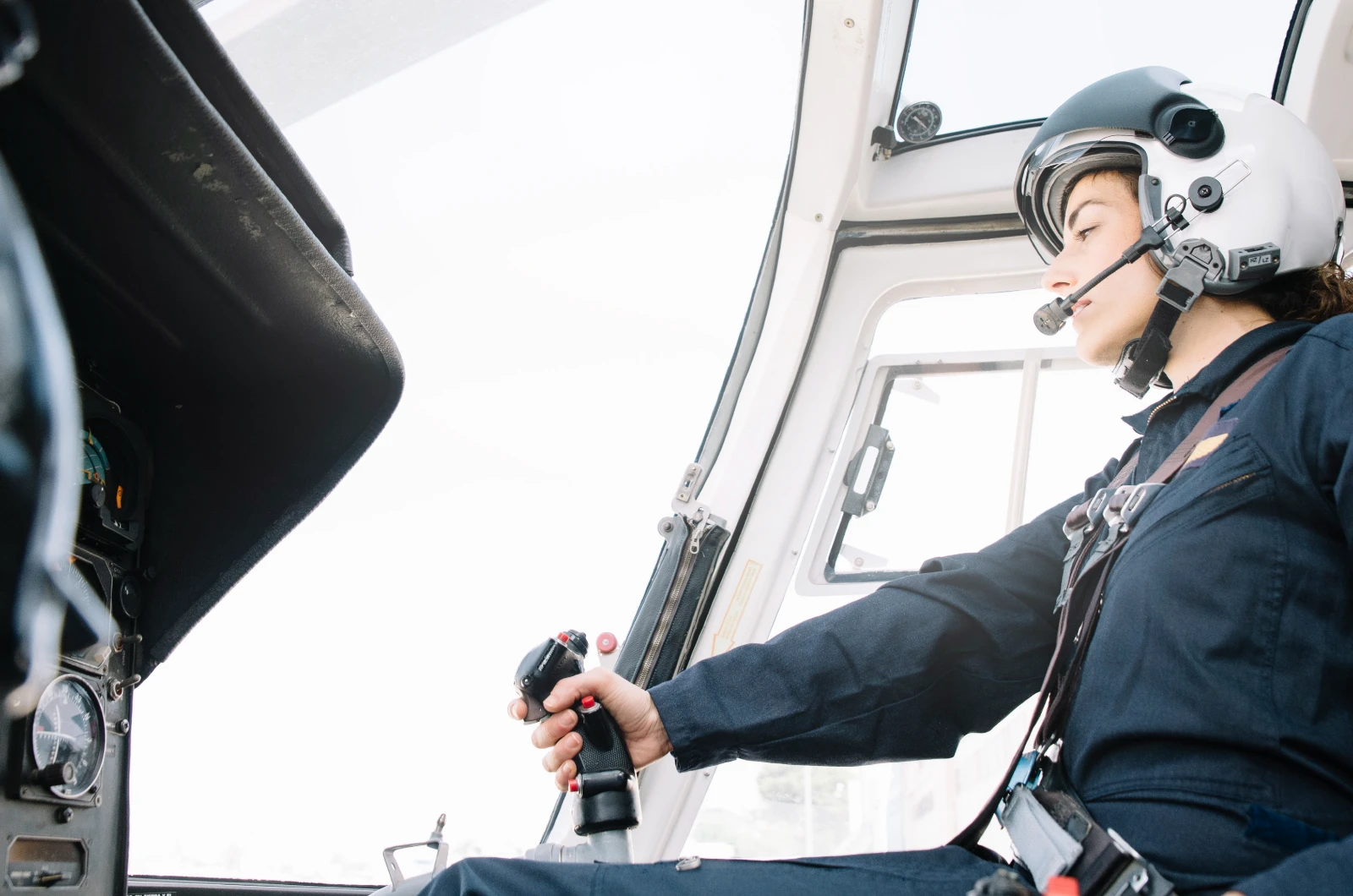
Aviation is one of the most exciting and rewarding professions, and being a helicopter pilot can offer you unique experiences. From flying over breathtaking landscapes to working on rescue missions, the possibilities are endless. But how do you become a helicopter pilot? Here’s everything you need to know to begin this incredible journey.
1. What does it take to become a helicopter pilot?
Being a helicopter pilot requires technical, physical and mental skills. It is not only a matter of flying, but also of making quick decisions, handling complex situations and having excellent coordination.
– Helicopter Pilot License (PPL-H): This is the first step. The Private Helicopter Pilot License (PPL-H) allows you to fly for personal use, but not to work professionally. To obtain it, you must complete theoretical and practical training, which includes at least 45 hours of flight time.
– Commercial Helicopter Pilot License (CPL-H): If your goal is to work as a helicopter pilot, you will need a Commercial Pilot License (CPL-H). This requires more flight hours (usually about 150 hours), advanced knowledge of aeronautics and a practical exam.
– Airline Transport Pilot License (ATPL-H): If you want to reach the highest level and fly helicopters for large companies or international flights, the ATPL-H is the next step. It is the most advanced license and requires more flight hours and in-depth knowledge of aviation.
Medical and physical requirements
The job of helicopter pilot requires excellent physical health. To make sure you are fit to fly, you must undergo a medical examination.
3. Training and flight schools
The road to becoming a helicopter pilot goes through a flight school. Here you will receive theoretical training in aeronautics, meteorology, navigation and more. Practical training includes flight hours under the supervision of an experienced instructor. At Coptering we offer more than 30 courses that prepare you to obtain all the necessary licenses.
It is important to choose an accredited flight school with modern helicopters and qualified instructors. At Coptering we have the latest generation aircraft such as 3 units of the popular two-seater model Cabri G2 from Guimbal and 2 Airbus AS355n, which are benchmarks in terms of safety and efficiency. In addition to our helicopter simulator certified by EASA to teach multiple courses (IR, MCC, PBN, ATPL, IRI, among others), which provides additional training for professional pilots (instrument flight procedures, emergency and multiple cockpit cooperation) and training in SAR missions, HEMS, firefighting, rescue, police and offshore operations).
4. Career opportunities
Some of the areas in which you can work include:
– Passenger transportation: From tourist flights to transportation of executives or company personnel.
– Search and rescue: In emergency situations, helicopter pilots play a vital role in rescuing people.
– Maintenance and surveillance: Many companies require pilots to maintain equipment or to perform aerial surveillance tasks, such as monitoring forest fires.
– Industry work: Opportunities exist in construction, mining, and on oil rigs, where helicopters are used to transport materials or people.
5. Tips to get started
If you decide to embark on this career, here are some tips:
– Do your research: Research the licenses you need and choose the school that best suits your needs.
– Start with introductory flights: At Copteting we offer introductory flights so you can experience what it’s like to fly before committing to training.
– Keep a positive mindset: The road to becoming a pilot can be long and challenging, but with perseverance and dedication, you will get there.
Barcelona is a city full of history, culture and architectural beauty. However, there is one experience that can elevate your visit to a new level: a helicopter flight over the city.

Whether for an anniversary, a marriage proposal, or simply to surprise your partner, a helicopter flight is ideal to say “you are special to me”.

Looking for an unforgettable gift to surprise someone special? From Coptering we offer a selection of experiences that will remain engraved in the memory forever.